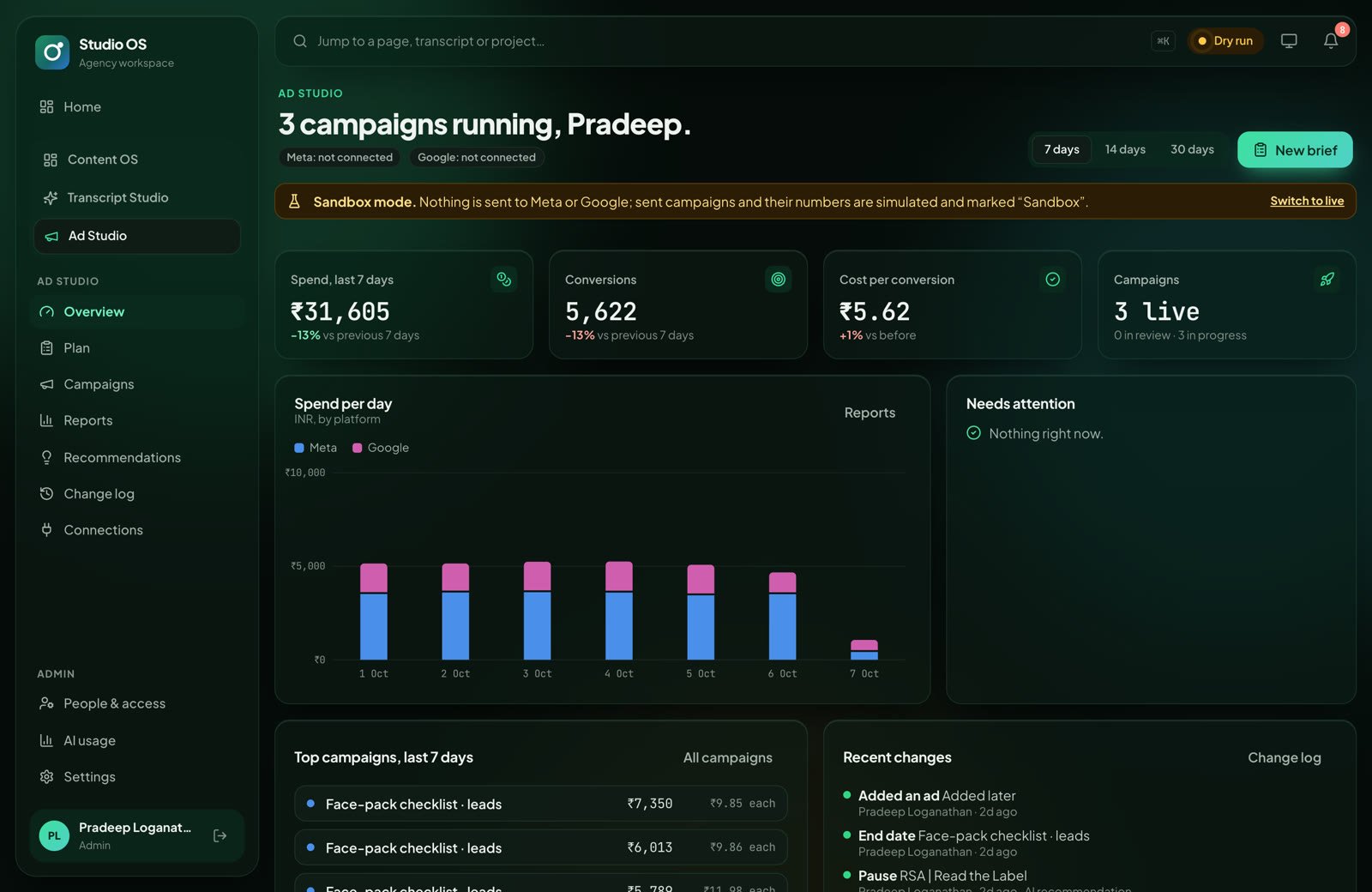
What it does
The ads part of Studio OS, the same product as the content platform under media and content, built for a marketing agency. A brief comes from a form or straight from a transcript the content team already worked on: goal, offer, audience, budget and creatives. An AI strategist proposes the campaign structure, audiences, budget split and ad copy, and drafts the campaigns with tracking tags. A person with launch rights reviews and either sends them to Meta or Google paused, or launches them. Numbers sync every morning, the AI suggests specific changes, and nothing changes until someone approves it. Every edit is in a change log.
The problem
Setting up campaigns by hand in two ad managers took hours per client, briefs and creatives lived in other tools, and optimisation depended on someone remembering to check the numbers.
Approach
One shared data model with the content side, so a transcript can become a brief and then a campaign. Launch rights are a permission, not a habit, and campaigns go out paused unless a person chooses otherwise. A sandbox mode simulates everything so nothing reaches Meta or Google while testing. Recommendations are specific and reversible, and each one waits for approval.
- Input
- AI step
- Rules or code
- Person decides
- Result
Screens
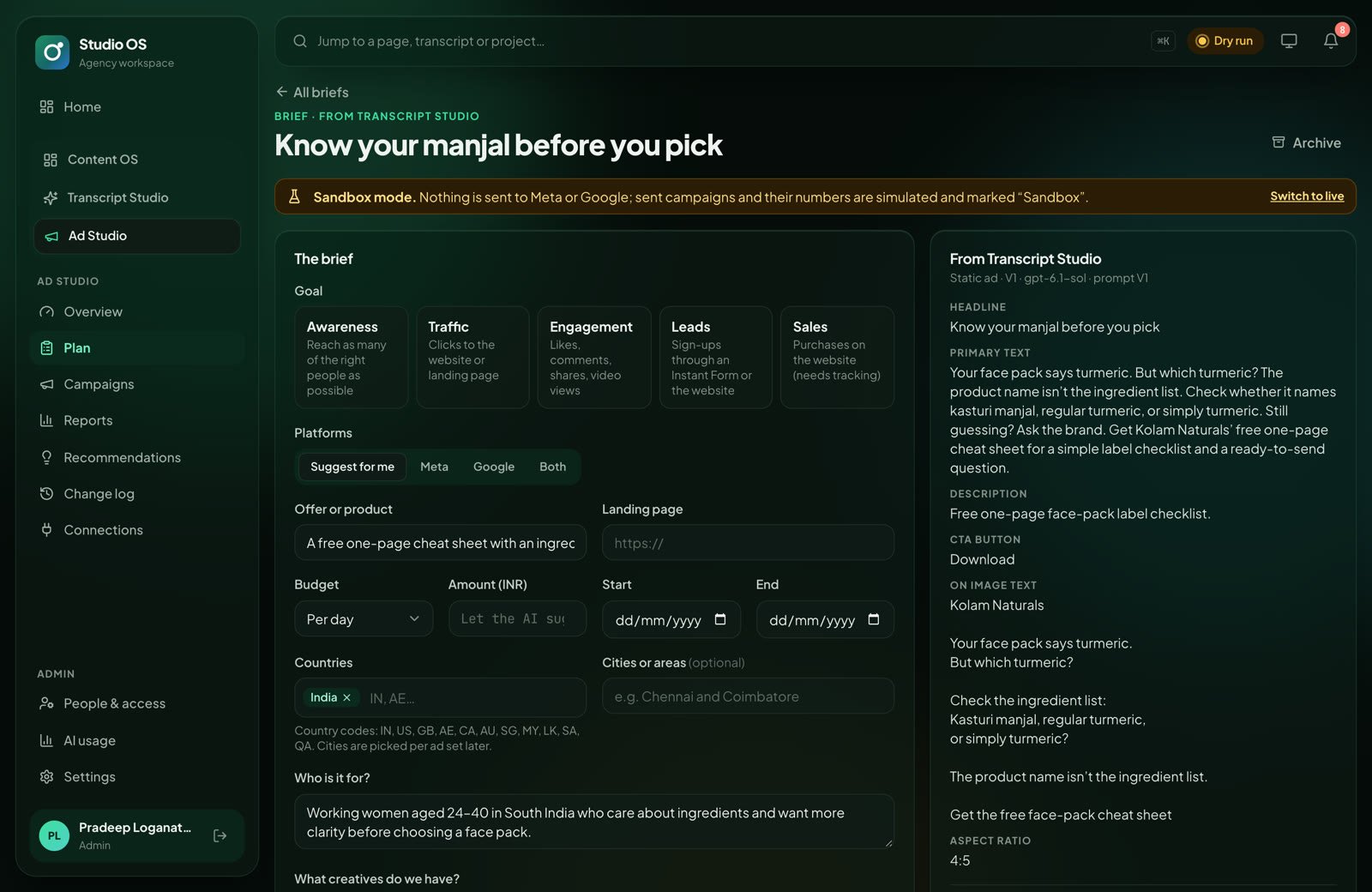
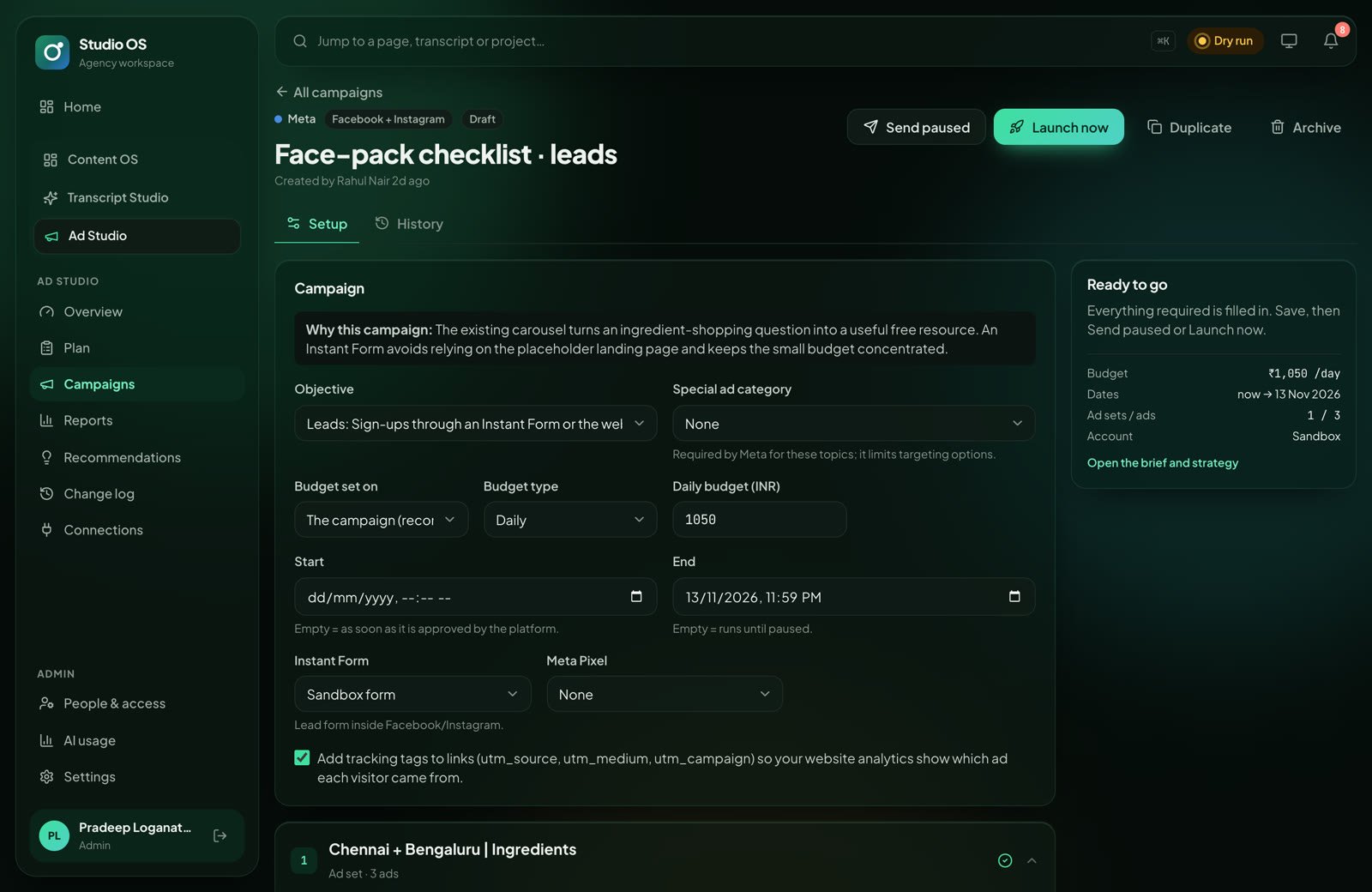
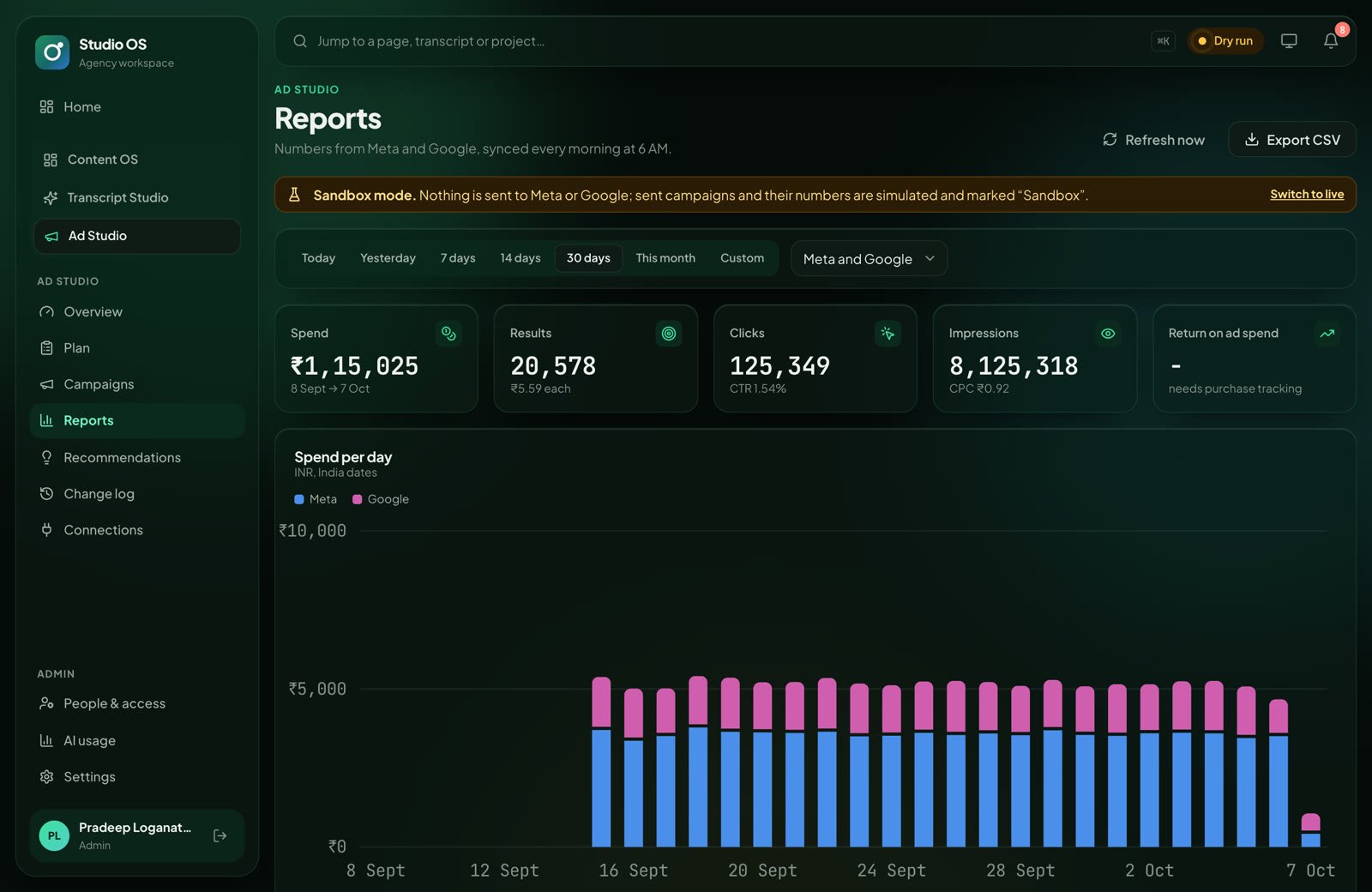
Swipe sideways to see the whole screen.
Client work is shown under confidentiality agreements: no client names, and screens are recreated with sample data.
Stack
- React
- TypeScript
- PostgreSQL
- Meta and Google Ads APIs
- LLM APIs
Impact
Typical for systems like this.